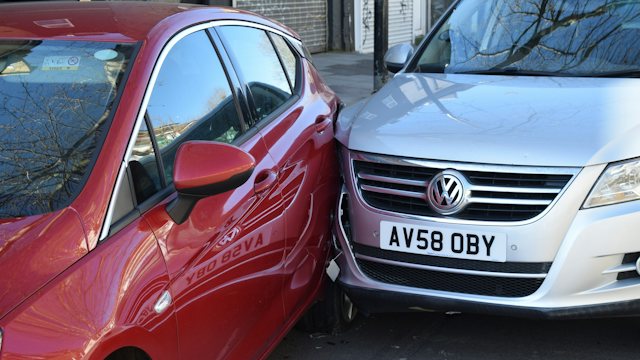
October is harvest season in Harnett County. Tractors, combines and grain trucks are moving between fields, deer are on the move, and the sun sets a little earlier each evening. Each of these makes our rural roads more dangerous, and together they make fall one of the riskiest times of year to drive here.
Here is what to watch for, and why it matters so much who is at fault if a crash does happen in North Carolina.
Farm equipment on two-lane roads
An orange-and-red triangle on the back of a vehicle is a slow-moving vehicle emblem. It means the vehicle is designed to travel at 25 mph or less. If you’re coming over a hill at 55 mph, you can close that gap in a few seconds.
- Slow down as soon as you see the emblem. Give yourself time and space.
- Don’t pass on a curve, a hill or in a no-passing zone. Wide equipment can block your view of oncoming traffic.
- Watch for left turns. One of the most common farm equipment crashes happens when a driver passes a tractor just as it turns left into a field or driveway. Wide equipment sometimes swings right before turning left, which can look like an invitation to pass.
- Be patient. Most farmers will pull over when it’s safe to let traffic go by.
Deer season
Deer crashes in North Carolina rise sharply in the fall, peaking from October through December, mostly around dawn and dusk. A few habits help:
- Slow down near wooded areas and fields, especially early in the morning and around sunset.
- Use your high beams when there’s no oncoming traffic.
- If you see one deer, expect more behind it.
- If a deer steps into the road, brake firmly and stay in your lane. Swerving can put you into oncoming traffic, a ditch or a tree, which is often far worse than hitting the deer.
Insurance matters here too. Hitting an animal is usually covered under the comprehensive part of an auto policy, while swerving and hitting something else is usually treated as a collision. Coverage varies, so check your own policy.
Earlier darkness
Daylight saving time ends on Sunday, November 1, 2026. Overnight, many evening commutes and school pickups move into the dark. Pedestrians, cyclists and children at bus stops become harder to see.
A reminder about school buses: when a bus stops with its stop arm out, traffic in both directions must stop on two-lane roads and on roads without a median. Only on divided roads with a median may traffic going the opposite way continue.
Why fault matters so much in North Carolina
North Carolina is one of only a handful of places that still follows contributory negligence. In most cases, if you are found even slightly at fault for a crash, you can be barred from recovering anything from the other driver. Passing in a no-passing zone, speeding past a slow-moving vehicle or looking at a phone can all be used to argue that you share the blame.
There are exceptions, such as the “last clear chance” doctrine, and insurance companies know this rule well. That is one reason it is important to be careful about what you say after a crash, and to talk with a lawyer before giving a recorded statement.
If you are in a crash this fall
- Call 911, and get medical care, even if you feel fine at first.
- Take photos of the vehicles, the road, any farm equipment and its markings and lights, and the surrounding area.
- Get names and contact information for the other driver and any witnesses.
- Don’t admit fault or guess about what happened. Stick to the facts.
- Talk to a lawyer before giving a recorded statement to an insurance company.
Most personal injury claims in North Carolina must be filed within three years, and some deadlines are shorter. Our free car accident guide walks through the first hours and days after a crash, and you can learn more about our personal injury practice.
If you or someone in your family has been hurt on a Harnett County road, call Buzzard Law Firm at 910-893-2900. We fight to win.
This article is general information, not legal advice. Every case is different; to talk about yours, call 910-893-2900. Learn more about our personal injury practice.
 Free 6-page guideAfter a Car Accident in North CarolinaWhat to do at the scene, in the first week, and before you talk to an insurance company, plus the North Carolina fault rule that catches most people off guard.Get the free guide →
← Older: Does a wedding ring need to be returned during divorce?